Common problems and how a plumber fixes them
| The problem | Usual cause | What the plumber does |
|---|---|---|
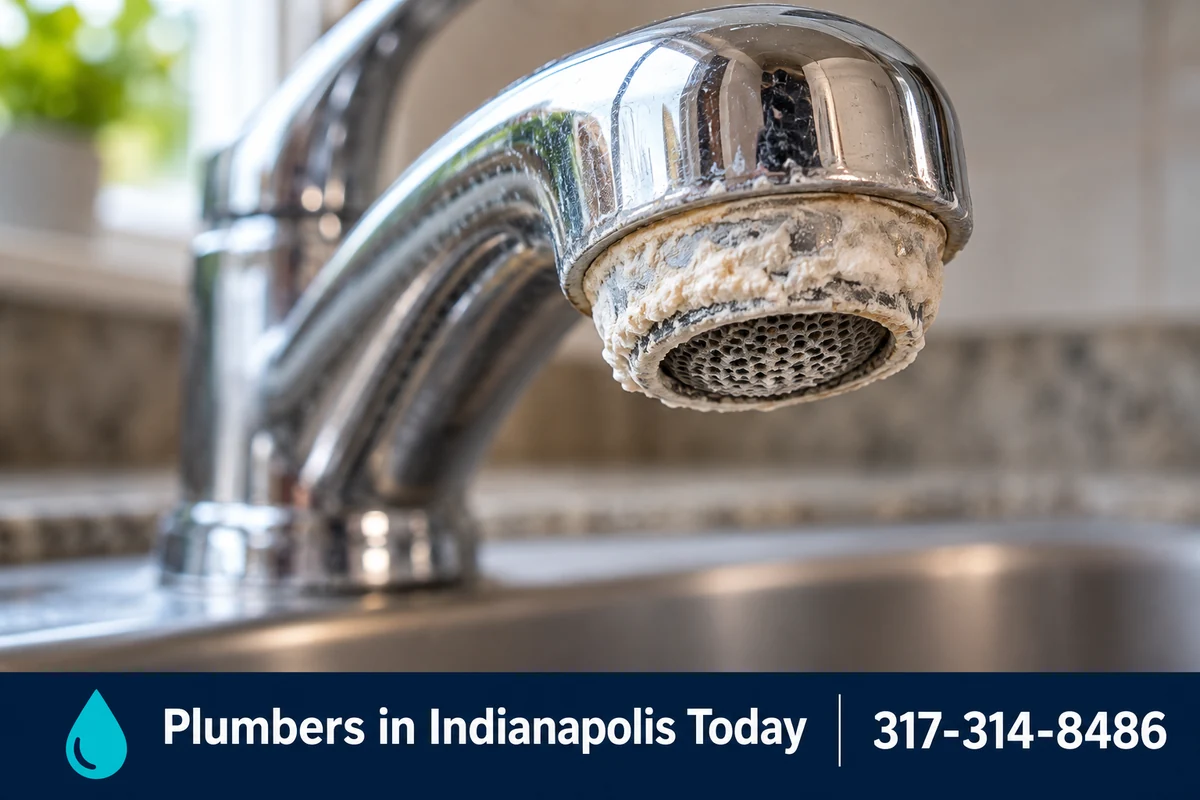
| White scale on faucets and glass | Hard water minerals | Water test and a correctly sized softener |
| Softener isn't using salt | Bridged salt, clogged injector or control fault | Clears the brine tank or repairs the valve |
| Salty or slippery water | A regeneration setting issue | Reprograms the control valve |
| Water heater rumbling | Scale inside the tank | Flushes the heater and softens the water supply |
Plumbing problem right now?
Tell us what's happening and where you are. Calls are answered 24/7, and it's free to call.
Signs you have hard water
- White, chalky scale on faucets, shower heads and glass shower doors
- Spots on dishes and glasses after the dishwasher
- Soap and shampoo that don't lather well
- A water heater that rumbles or loses efficiency
- Dry skin and stiff laundry
Your water utility publishes a yearly water quality report that lists hardness. Ask the contractor to test your water at the tap before recommending a softener size.
What a water softener installation includes
- Water test and sizing based on hardness and household size
- Installing a bypass valve so you can isolate the softener
- Connecting to the main water line, a drain line with an air gap, and power
- Programming regeneration and loading salt
Softeners, filters and conditioners
A softener removes the calcium and magnesium that cause scale. A whole house filter, often carbon based, improves taste and odor and reduces chlorine, but doesn't soften water. Salt free conditioners change how minerals behave so they cause less scale, without removing them. Many homes pair a softener with a filter. The contractor can explain which combination suits your water test results.
Where the softener goes
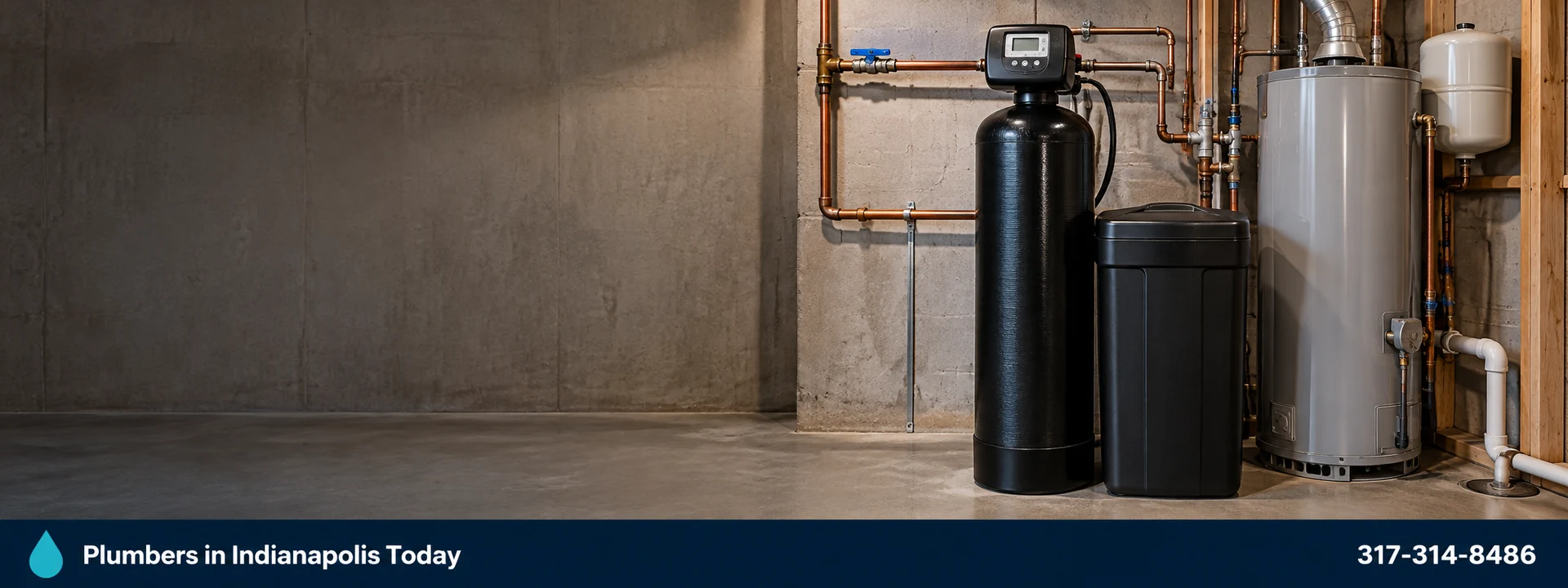
Softeners are usually installed in the basement or utility room near where the main water line enters, before the water heater, so the heater gets softened water. Outdoor spigots are often left on hard water to save salt. If your home has a well rather than city water, mention it, because well water may also need iron or sediment treatment.
Best time to install a water softener
Interest in water softeners in Indianapolis peaks in March and April. Installing before or after that rush can mean faster scheduling. Properties with irrigation or fire lines may also need backflow testing.
How this works: Plumbers in Indianapolis Today is a referral service. When you call 317-314-8486, we connect you with an independent, licensed plumbing contractor who serves your area. The contractor quotes, performs and stands behind the work, not us.
Related plumbing services
Is Indianapolis water hard?
Water across central Indiana is generally considered hard because it carries dissolved calcium and magnesium. Hardness varies by source and utility, so check your utility's annual water quality report or have the contractor test your tap water.
How much does water softener installation cost?
Cost depends on the softener size and type, the existing plumbing near your main line, and whether a drain or outlet needs to be added. The contractor will quote after checking your setup and water hardness.
Do I need a plumber to install a water softener?
A licensed plumber is the safest choice because the softener ties into your main water line and needs a code compliant drain connection. Plumbing work on drinking water lines in Indiana is licensed work, and some jobs need a permit.