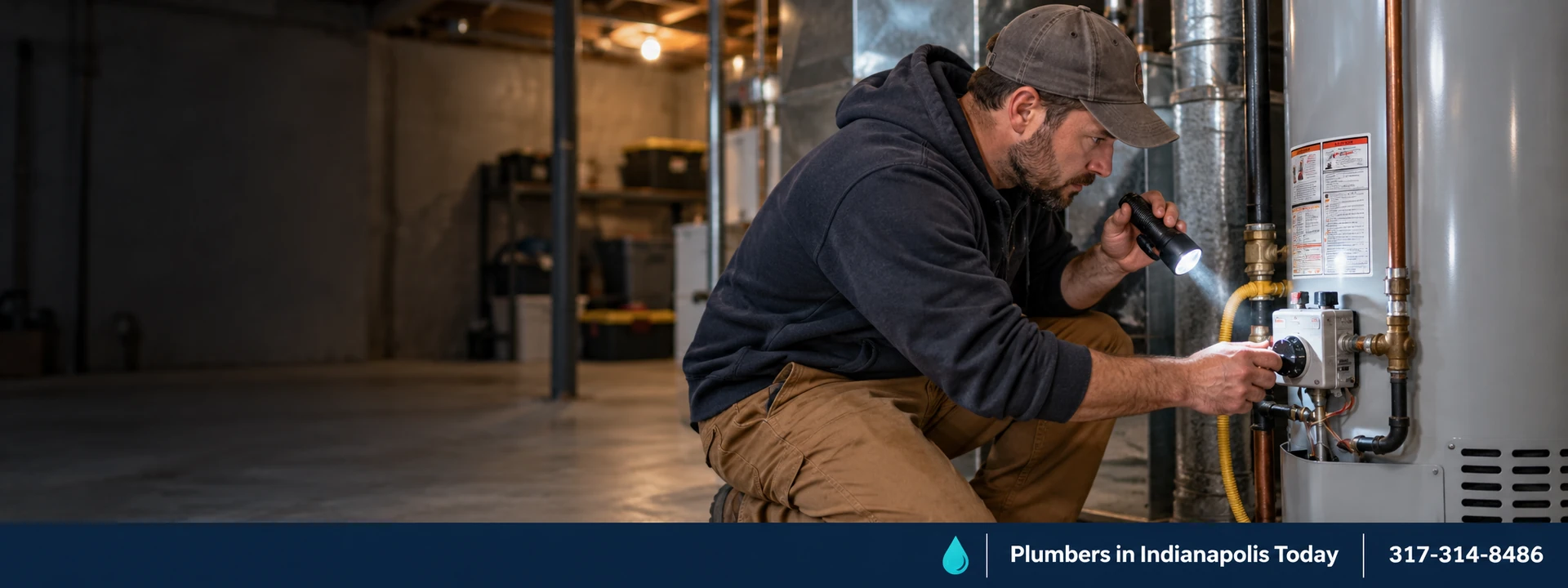
Common problems and how a plumber fixes them
| The problem | Usual cause | What the plumber does |
|---|---|---|
| No hot water at all | Pilot out, failed thermocouple or igniter (gas), or a tripped breaker or failed element (electric) | Tests the controls and replaces the failed part |
| Hot water runs out fast | Sediment buildup or a failed lower element | Flushes the tank or replaces the element |
| Water around the base | Leaking relief valve, drain valve or fitting, or a failed tank | Replaces the valve or fitting; a leaking tank means replacement |
| Popping or rumbling | Sediment cooking on the bottom of the tank | Flushes and descales the tank |
| Rotten egg smell | Reaction with the anode rod | Replaces the anode rod |
Plumbing problem right now?
Tell us what's happening and where you are. Calls are answered 24/7, and it's free to call.
Water heater problems we connect you with a plumber for
- No hot water, or hot water that runs out quickly
- Water leaking from the relief valve, the drain valve or the connections
- A pilot light that won't stay lit, or a tripped breaker on an electric heater
- Rumbling, popping or rotten egg smells from sediment and anode rod problems
- Error codes and ignition faults on tankless water heaters
What is the most common problem with a water heater?
Sediment buildup is the most common problem: minerals settle at the bottom of the tank, causing rumbling noises, less hot water and, eventually, leaks. Central Indiana's hard water makes this worse, which is why annual flushing and a water softener can extend a tank's life.
Is it worth repairing a water heater, or should I replace it?
Repair usually makes sense when the tank is younger than about eight years and the fault is a part such as a thermostat, element, thermocouple or valve. If the tank itself is leaking or the heater is near the end of its expected life, replacement is normally the better value, because a leaking tank can't be repaired. See water heater installation and replacement.
How long does a water heater last?
A standard tank water heater typically lasts around 8 to 12 years, and a tankless unit often lasts 20 years or more with regular descaling. Hard water, skipped maintenance and high temperature settings shorten that lifespan.
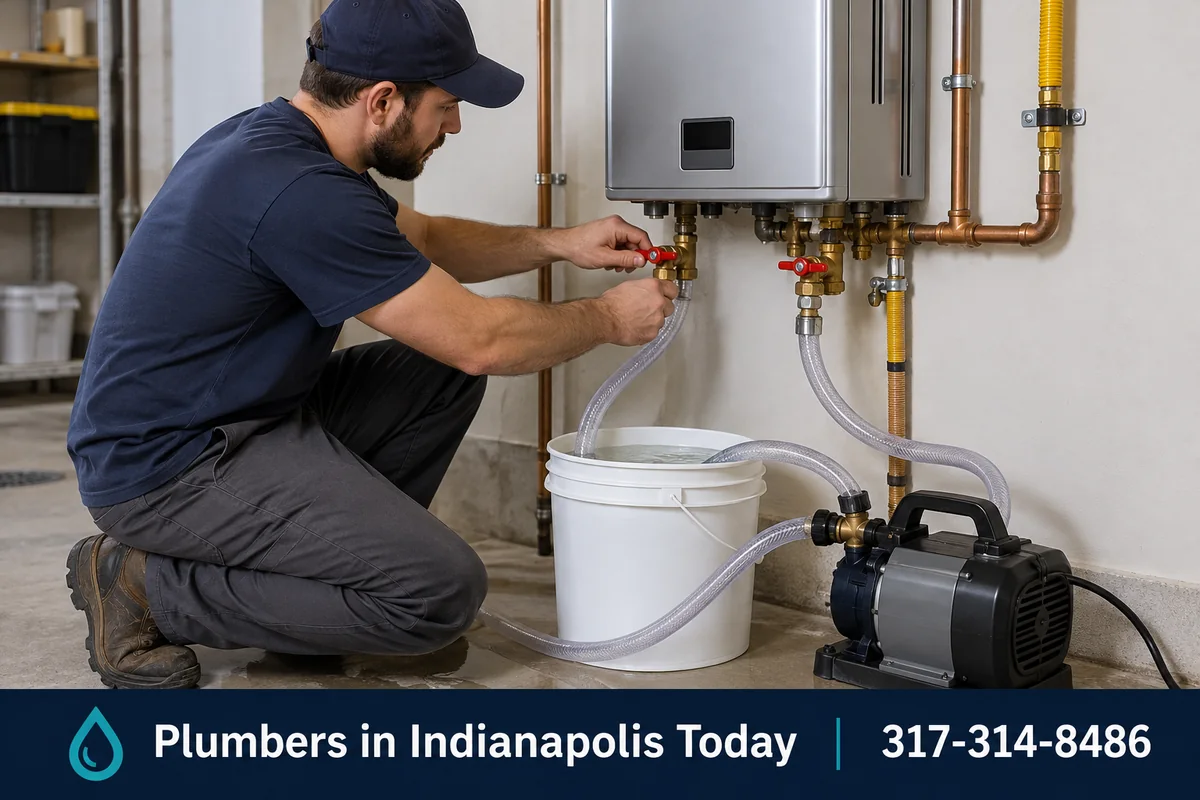
Tankless water heater repair and service
Tankless heaters fail differently from tanks. Common calls are scale buildup in the heat exchanger, ignition or flame sensor faults, blocked venting, and flow sensors that don't detect demand. In hard water areas like central Indiana, most manufacturers recommend descaling the unit regularly. A contractor can flush the heat exchanger through the service valves and check the error code history.
Seasonal note
Water heater calls in Indianapolis rise in late fall and winter, when incoming water is colder and heaters work hardest. If your heater is showing its age, getting it checked before the first cold snap helps avoid a no hot water emergency.
How this works: Plumbers in Indianapolis Today is a referral service. When you call 317-314-8486, we connect you with an independent, licensed plumbing contractor who serves your area. The contractor quotes, performs and stands behind the work, not us.
Related plumbing services
What's the average cost to fix a water heater?
It depends on the part that's failed, the heater type (gas, electric or tankless) and labor time, and a thermostat or element repair costs far less than replacing the unit. The licensed contractor we connect you with will diagnose the fault and give you a written price before doing the work.
Can a water heater be repaired the same day?
Most common repairs, including thermostats, elements, thermocouples and valves, can be done in one visit if the plumber carries the part. Tankless repairs sometimes need a part ordered from the manufacturer.